WebP & Performance · · 5 min read
Written by Saleh S.
Saleh S. - Author & Developer at IMG Harvest. Read author bio.
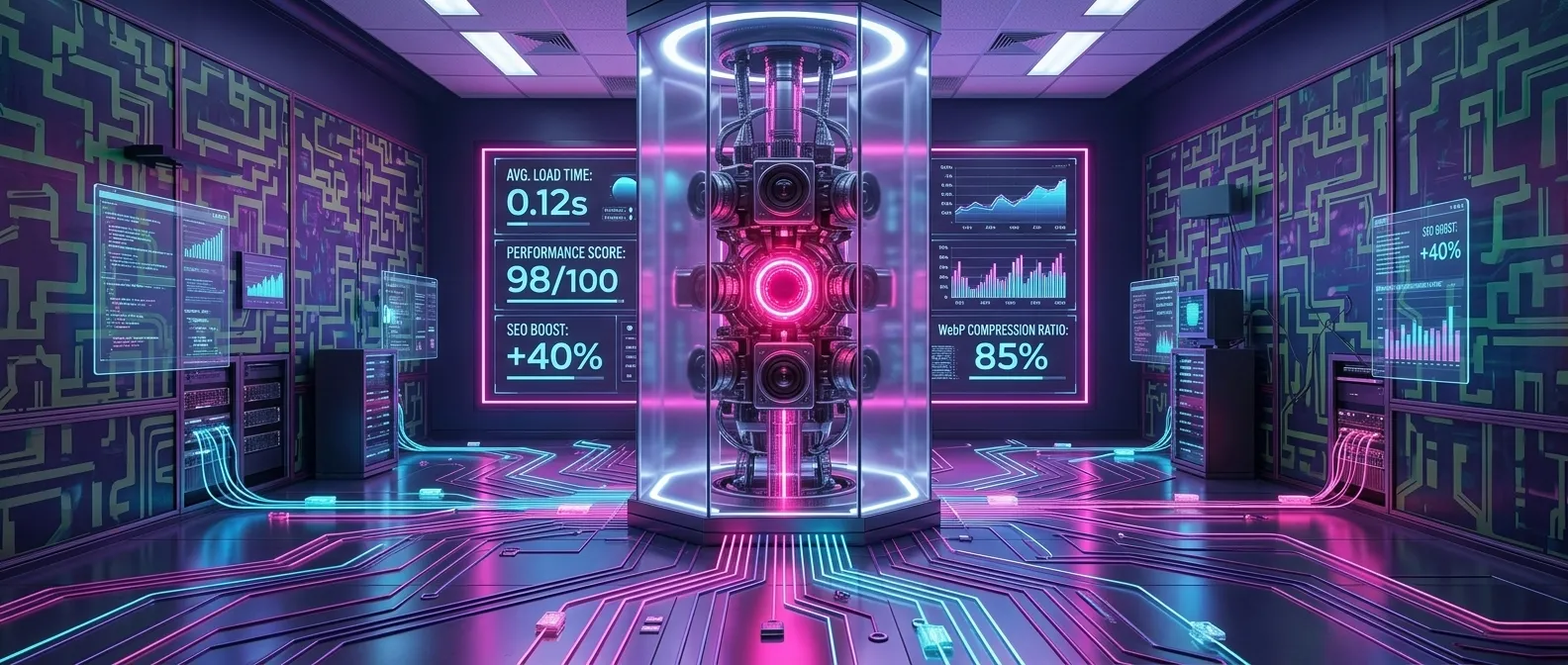
Images account for more than 60% of the total byte weight on an average webpage today. Slow image loading directly damages page performance and visitor retention. WebP was engineered by Google to solve this exact bottleneck.
What is WebP and How Does it Work?
WebP is a modern image format built specifically for the web. It combines the lossy compression advantages of JPEG with the lossless crispness and transparency of PNG into a single light format.
- Provides 25% to 34% smaller file sizes than equivalent quality JPEGs.
- Delivers 26% smaller files than transparent PNGs while preserving alpha channel transparency.
- Employs advanced predictive coding algorithms to encode pixel data far more efficiently.
Impact on Core Web Vitals (LCP) and Google SEO Rankings
Google evaluates page speed directly via Core Web Vitals, specifically Largest Contentful Paint (LCP). Since hero images are frequently the largest element on a screen, converting them to WebP directly boosts LCP speed and improves SEO rankings.
Global Browser & Device Compatibility
WebP is natively supported by over 97% of modern web browsers worldwide, including Google Chrome, Apple Safari, Mozilla Firefox, Microsoft Edge, and mobile platforms (iOS and Android).
Key Takeaways
Switching to WebP is essential for website owners and e-commerce stores looking to reduce bandwidth costs, accelerate loading times, and improve search engine performance.
Ready to put it into practice? Try the WebP to JPG / PNG converter - free, in-browser, and private.